
B2B teams have spent years trying to get in front of more buyers.
The better question now is whether the right buyers have a reason to care when they see you. This edition looks at why awareness is shifting from reach to relevance, why AI search is pushing companies back to real marketing fundamentals, and why B2B teams need sharper standards for evaluating AI promises.
In this edition:
This edition is about making your brand easier to trust before the buyer is ready to talk. More impressions will not fix weak relevance. More search tricks will not replace authority. More AI tools will not help if your team cannot separate real capability from polished noise.
THE PLAY
The Relevance-First Awareness Play

Awareness is not dead. Lazy awareness is.
The old version was built around reach: impressions, lists, event scans, paid exposure, and the hope that enough visibility would turn into demand. The newer version is harder and more useful. Buyers are learning in AI answers, creator feeds, expert communities, peer conversations, and category searches long before they show intent.
That means your job is not just to be visible. Your job is to be useful, credible, and specific enough to be remembered.
Steps (4):
Step 1: Replace broad reach with buyer context
Pick one buyer segment and define what they are actually trying to understand before they talk to sales. Not the product category. Not your feature set. The problem they are naming, comparing, and trying to make sense of.Step 2: Build content around proof, not polish
AI search and buyer research are getting better at filtering thin content. Make your strongest pages clearer, more specific, and easier to verify. Add expert names, source links, real examples, customer language, and direct answers to the questions buyers already ask.Step 3: Question AI claims before you buy them
When a vendor says “AI-powered,” ask what the tool actually does, what inputs it uses, how outcomes are measured, and where human judgment still belongs. If the answer stays vague, the feature will probably stay vague too.Step 4: Turn relevance into sales language
Once marketing finds the sharper buyer context, sales should use it. Outreach should reference the problem the buyer is already researching, the tradeoff they are likely weighing, and the practical reason the conversation is worth having now.
Example line:
“We do not need more buyers to vaguely know us. We need the right buyers to understand why we belong in the conversation.”
Expected outcome:
Your team builds stronger early awareness, improves buyer trust before the first call, and creates sales follow-up that feels more connected to the way buyers actually research.
Buyer trust gets easier to build when the brand has already done some of the explaining.
HubSpot’s Modern Sales Playbook fits that work, helping teams sharpen the message, follow-up, and sales motion around what buyers actually need to believe. Relevance does more than create attention. It makes the next conversation easier to earn.

🚀 Crush Your Sales Quota with AI-Powered Strategies
The modern sales playbook that combines proven frameworks with cutting-edge AI to help you exceed targets consistently.
AI-driven techniques to 2X your response rates. Master the 10-30-10 video framework that converts. Discover proven questions that uncover true customer pain points and Battle-tested tactics to outmaneuver competitors.
What makes this different? We've merged time-tested sales frameworks with AI technology to create a system that actually works in today's market.
MARKET INTEL
B2B awareness is about relevance now

B2B awareness has moved past the old reach model. Buyers are researching independently, encountering brands through AI-generated answers, listening to practitioner voices, and looking for signs of authenticity before engaging with sales. The useful shift is that awareness is no longer about being seen by a bigger audience. It is about showing up in trusted environments with enough expertise, clarity, and relevance to earn a place in the buyer’s thinking. See full article.
Why it matters for B2B sales:
Relevance makes the first sales conversation easier. When buyers have already seen your point of view in a trusted place, reps do not have to spend the whole call explaining why the problem matters.
Your Move:
Choose one core buyer question and build a stronger answer around it. Make it specific, expert-led, sourced, and useful enough that a buyer would save it even if they were not ready to book a meeting.

AI search rewards real authority

AI search is making the old search shortcuts less useful. As discovery moves closer to AI-generated answers, keyword stuffing and algorithm gaming matter less than experience, expertise, authority, trust, and original information. The brands that win early discovery will be the ones giving both AI systems and human buyers a real reason to surface, cite, and believe them. See full article.
Why it matters for B2B sales:
If your company does not demonstrate real authority online, buyers may never see you during the research phase. Stronger proof gives sales a better starting point because the buyer has already found evidence that your team knows the category.
Your Move:
Audit one high-value landing page and ask whether it proves expertise or just claims it. Add named experts, product proof, certifications, original examples, customer use cases, and direct answers to common buyer questions.

AI scrutiny needs sharper standards

Many B2B marketers are under pressure to adopt AI, but the evaluation process is not always keeping up. The risk is that teams buy polished tools without asking what the AI actually does, what data it uses, how outcomes are measured, and where human judgment still matters. AI can improve execution, but only when teams define the business result before choosing the system. See full article.
Why it matters for B2B sales:
AI hype can create messy handoffs, unclear reporting, and tools that promise efficiency without improving buyer conversations. Sales teams need AI that improves timing, context, prioritization, and follow-up, not just another dashboard with vague automation claims.
Your Move:
Before evaluating an AI vendor, write down three outcomes you need the tool to improve. Then ask each vendor to demonstrate how their AI supports those outcomes, what data it requires, and how performance will be measured.
THE TOOL
Profound
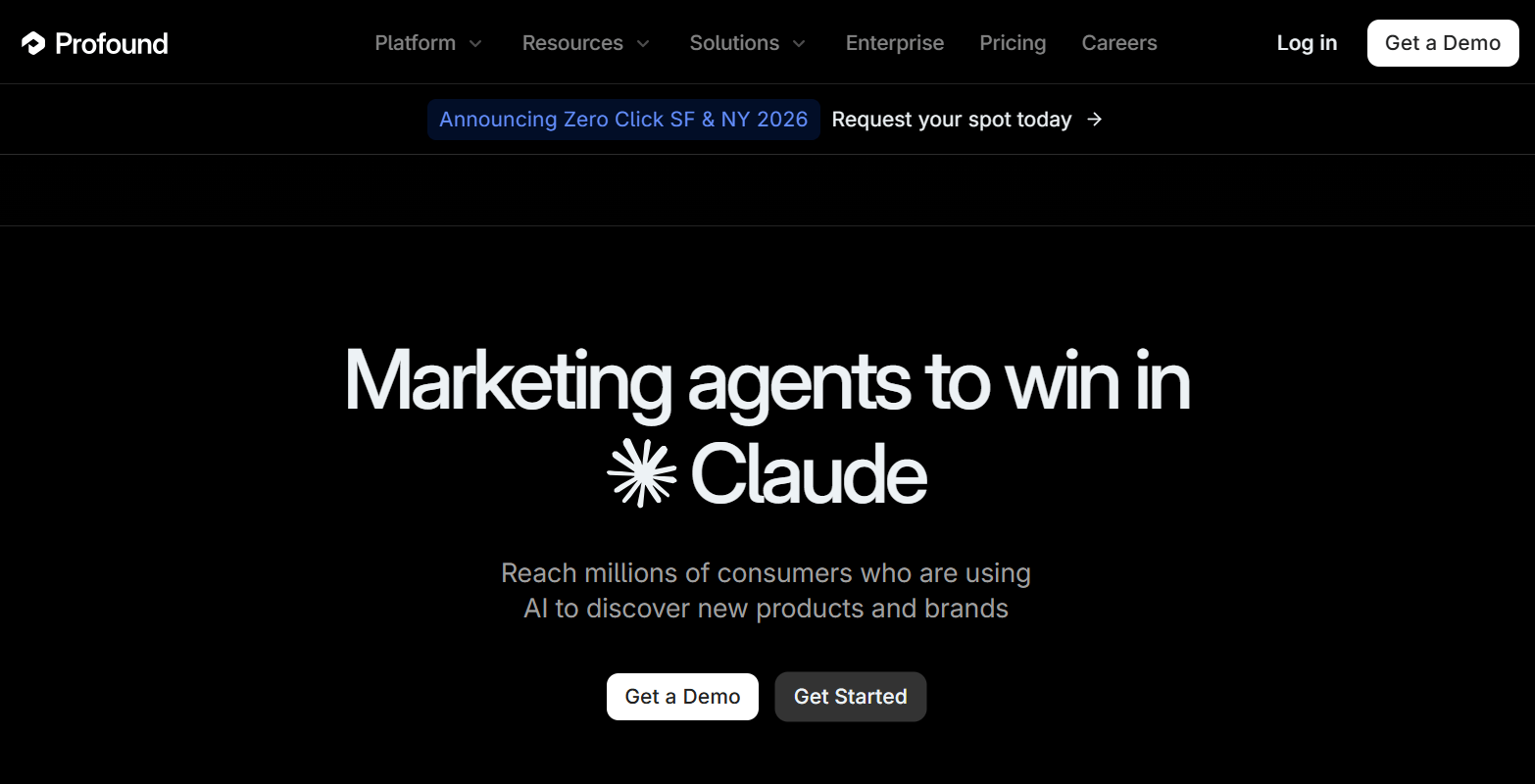
AI search visibility is hard to improve if you cannot see where your brand is missing.
Profound helps B2B teams track how their company, competitors, and category show up across AI answer engines. For this edition, it fits because relevance now depends on more than ranking in traditional search. Teams need to know whether buyers asking AI tools about their category are actually seeing them, how they are being described, and which gaps need stronger content, proof, or positioning.
FTC disclosure: Not sponsored. No affiliate relationship.
Trust builds more easily when the operational proof is already visible.
Fulfill addresses the same relevance problem for e-commerce and logistics teams, helping companies compare the top 3PL partners rather than choosing from a vague vendor list. The right partner makes growth easier to believe before the first serious conversation even starts.
We ranked 2,800 3PLs. Here are the top 100.

Every 3PL says they're the best. So we did the work. We ranked the top 100 in the country on the things that actually break or save a brand: peak season, accuracy, real support. Find out who made it, and whether your current one should have.
STEAL THIS
Follow-up email
Use this after a buyer engages with a thought leadership piece, an AI search topic, a category page, or a vendor comparison.
Subject: Thought this tied to [priority]
Hi [First Name],
I noticed [company] has been focused on [priority] and thought this might be relevant.
A lot of B2B teams are realizing the challenge is not getting more visibility for its own sake. It is showing up with sufficient relevance, evidence, and clarity for buyers to trust the message before a sales conversation starts.
I can send over a quick example of how teams are tightening this in their go-to-market motion if helpful.
[Your Name]
Take This Edition’s Poll:
What makes B2B awareness useful?
THE CLOSE
The best B2B marketing is getting harder to fake.
That is a good thing.
AI search is forcing brands to prove authority. Buyers are rewarding relevance over reach. Marketers are starting to ask tougher questions about what AI actually improves. The common thread is simple: vague visibility is losing value, and useful credibility is gaining it.
Be easier to trust before the buyer is ready to talk.
See you next time,

P.S. Interested in reaching our audience? You can sponsor our newsletter here.