In partnership with


B2B content has a harder job now. It has to help buyers understand the problem, trust the brand, and defend the decision internally.
But it also has to work for AI tools, agents, summaries, and third-party surfaces shaping the shortlist before a buyer ever lands on your site. The better move is sharper content, stronger talent, and influence built on trust rather than reach.
Trust does not stop at the blog post anymore. Buyers are watching the message in more places, and Roku Ads Manager is useful because it lets B2B teams carry that same clear, provable story into TV without needing a big media-buying machine behind it.
How Jennifer Aniston’s LolaVie brand grew sales 40% with CTV ads

For its first CTV campaign, Jennifer Aniston’s DTC haircare brand LolaVie had a few non-negotiables. The campaign had to be simple. It had to demonstrate measurable impact. And it had to be full-funnel.
LolaVie used Roku Ads Manager to test and optimize creatives — reaching millions of potential customers at all stages of their purchase journeys. Roku Ads Manager helped the brand convey LolaVie’s playful voice while helping drive omnichannel sales across both ecommerce and retail touchpoints.
The campaign included an Action Ad overlay that let viewers shop directly from their TVs by clicking OK on their Roku remote. This guided them to the website to buy LolaVie products.
Discover how Roku Ads Manager helped LolaVie drive big sales and customer growth with self-serve TV ads.
The DTC beauty category is crowded. To break through, Jennifer Aniston’s brand LolaVie, worked with Roku Ads Manager to easily set up, test, and optimize CTV ad creatives. The campaign helped drive a big lift in sales and customer growth, helping LolaVie break through in the crowded beauty category.
In this edition:
This edition is about making B2B growth more resilient in an AI-shaped market. Content strategy needs to work for both people and agents, marketing teams need to protect the talent pipeline, and influencer programs need to focus on the right kind of credibility.
THE PLAY
The Human-and-Agent Content Play

Deals get harder when your best content only works for one audience.
The human buyer wants a useful story, a reason to trust you, and proof they can carry into the buying group.
The AI agent wants structure, clarity, sources, proof points, competitive context, and language it can summarize without losing the point.
Your content has to serve both.
Steps (4):
Step 1: Make the core answer explicit
Do not hide differentiation inside clever phrasing. State who you help, what problem you solve, why it matters, and what proof supports the claim. If a human has to infer the answer, an AI tool may miss it completely.Step 2: Build content around buying-group questions
Different stakeholders need different proof. The CFO wants risk and return. The CIO wants architecture and security. The operator wants workflow impact. The champion wants a clean internal story. Build content that answers those questions directly.Step 3: Protect the talent that makes content smarter
AI can speed up production, but junior marketers still need work that teaches judgment, strategy, taste, client leadership, and commercial thinking. If teams automate every learning task, they weaken the middle layer they will need later.Step 4: Choose influence by trust density
The right B2B influencer is not always the one with the biggest account. A smaller practitioner with the exact audience, strong comment quality, and category credibility can be more valuable than a macro voice with diluted relevance.
Example line:
“Content is not just what buyers read anymore. It is what humans trust, agents summarize, and stakeholders reuse when the decision gets harder.”
Expected outcome:
Your team creates content that is easier to discover, easier to trust, and easier to reuse across AI search, sales conversations, influencer distribution, and internal buying-group alignment.
MARKET INTEL
B2B content strategy needs a ground-up rethink

Agent-based marketing shifts content from a traditional SEO asset to a broader visibility system, because buyers may now begin their research in chat windows, AI summaries, and agent-led comparisons instead of on a homepage or search results page. To influence those early shortlists, B2B teams need clear, consistent signals across owned pages, reviews, community mentions, analyst references, video descriptions, customer stories, and structured product information so AI tools can understand, trust, and repeat the right message. See full article.
Why it matters for B2B sales:
Sales may enter the conversation after the buyer has already formed a strong opinion from sources your team did not directly control. If your positioning, proof, and customer value are not clear across the ecosystem, reps may start the deal behind.
Your Move:
Ask five buyer-style questions in the AI tools your prospects likely use. Look at whether your company appears, how it is described, which competitors appear, and which sources shape the answer. Then update the weakest content gap first.

B2B teams need to protect the missing middle

AI is reshaping the marketing talent pipeline by automating many junior-level tasks, but the risk is that companies also remove the work early-career marketers need to build judgment, collaboration, creativity, and strategic thinking. The bigger issue shows up later, when fewer people have developed the experience required to become strong mid-level operators capable of connecting execution, client leadership, creative direction, and commercial strategy. See full article.
Why it matters for B2B sales:
Sales and marketing alignment depends on people who can interpret messy problems, not just operate tools. If teams only optimize for short-term efficiency, they may weaken the human judgment that makes campaigns, content, and buyer conversations better.
Your Move:
Pick one task AI now helps your team complete faster. Then name the skill that task used to teach. Add a review step, a coaching moment, or an ownership layer so that the efficiency gain does not erase the learning path.

B2B influencer ROI depends on audience fit

B2B influencer marketing is strongest when teams prioritize relevance over reach, choosing voices buyers already trust rather than simply chasing the largest following. Macro-influencers can boost visibility, but micro-influencers often drive more meaningful action because their audiences are more specific, more credible, and more closely aligned with the decision-makers a company actually wants to reach. See full article.
Why it matters for B2B sales:
Trusted voices can shape buyer confidence before the first sales touch. When the influencer’s audience matches your ICP, sales start with more familiarity, more credibility, and less cold-start friction.
Your Move:
Build a short influencer list around audience quality, not follower count. Check comment depth, buyer relevance, category expertise, and whether the person can explain your problem space in a way your market already trusts.
THE TOOL
Wynter
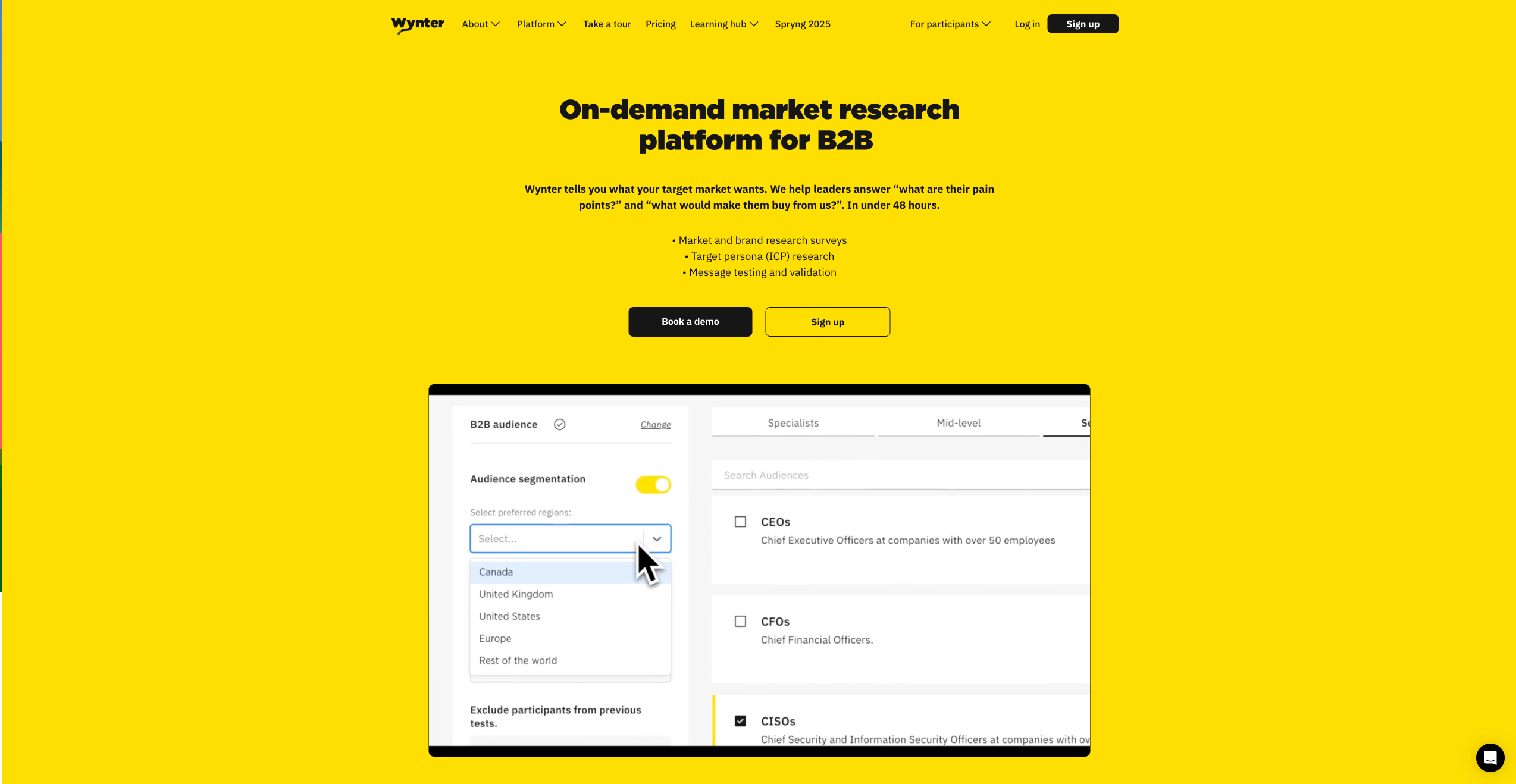
Most teams do not need more content opinions. They need better feedback from the people they are actually trying to persuade.
Wynter helps B2B teams test messaging, landing pages, value propositions, and sales copy with panels that match their target audience. For this edition, that matters because content now has to work harder across humans, buying groups, and AI-shaped discovery. Before scaling the message, teams need to know whether the right buyers understand it, believe it, and know why it matters.
FTC disclosure: Not sponsored. No affiliate relationship.
A CRM is part of the content system now, whether teams admit it or not. Attio is useful because it gives sales and marketing one cleaner place to understand the relationship, the account context, and the customer signals that make a message feel credible instead of recycled.
Attio - the AI CRM for modern businesses.

Attio is the AI CRM that keeps you ten steps ahead.
Ask Attio anything. Where should I focus? What deals are at risk? Search, update, and create across your customer data.
Ask more from CRM. Ask Attio.
STEAL THIS
Follow-up email
Use this when you want to send content that helps a buyer and their internal team understand the decision more clearly.
Subject: Useful context on [topic]
Hi [First Name],
I thought this might be helpful as your team looks at [problem/category].
The main thing worth pressure-testing is whether [current approach] provides your team with enough clarity on [key risk/outcome]. In similar conversations, the companies that move fastest usually need three things: a clear business case, proof from the right source, and a simple explanation they can share internally.
Happy to send a short version you can pass along if useful.
[Your Name]
Take This Edition’s Poll:
What would improve B2B content most?
THE CLOSE
B2B content is no longer just a publishing calendar.
It is a trust system.
It has to help human buyers feel confident, help AI agents understand the answer, help sales carry the story, and help the market hear from voices it already respects.
That takes more than speed. It takes structure, judgment, and sharper proof.
Make the content easier to understand. Make the talent behind it stronger. Make the influence around it more credible. Then demand has a better foundation to build on.
See you next time,

P.S. Interested in reaching our audience? You can sponsor our newsletter here.